
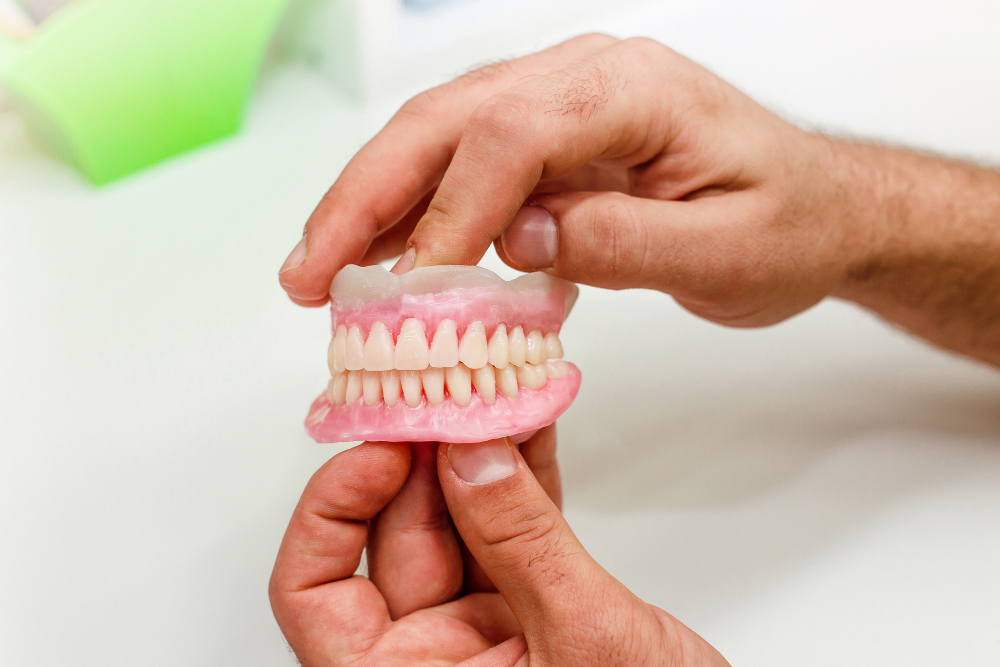
Does your smile feel less secure than it used to? If your dentures shift while eating, speaking, or laughing, it may be a sign that they no longer fit properly. Loose dentures are a common issue that can affect comfort, confidence, and oral health.
In this guide, we explain why dentures become loose, the signs that indicate a fit problem, and what you can do to restore comfort and stability.
Why Loose Dentures Are More Common Than You Think
Dentures do not sit in a fixed jaw. Over time, the bone and gum tissue beneath them naturally change shape, a process called bone resorption. This is completely normal, but it does mean that dentures fitted perfectly three years ago may not fit the same way today.
Add to this everyday wear, changes in weight, and the general ageing process, and it becomes clear why so many people find themselves reaching for loose denture adhesive more often.
Many denture users begin noticing changes in fit sooner than expected, often within a few years of receiving their dentures. However, many delay addressing the problem, either assuming it is a normal part of ageing or simply not knowing what steps to take next.
So, how do you know when enough is enough? Here are the five most telling signs.
Sign 1: Your Dentures Are Slipping While Eating
Difficulty keeping dentures stable during meals is often one of the earliest signs that the fit has changed. If your dentures move when you bite into food or chew, it usually means the denture no longer fits as securely as it should.
This does not just affect comfort. It affects your nutrition too. Many people with poorly fitting dentures begin avoiding hard or crunchy foods like apples, carrots, or crusty bread. Over time, this can limit diet quality and impact overall health.
What this looks like in practice:
- You feel the dentures lift or rock when chewing on one side
- You need to eat more slowly or cut food into unusually small pieces
- You feel a clicking or shifting sensation mid-meal
- Eating in public becomes something you actively avoid
If mealtimes feel like a logistical challenge rather than something to enjoy, it is time to take action.
Sign 2: You Are Having Difficulty Speaking with Dentures
Changes in speech clarity are often among the earliest signs that dentures are no longer fitting as intended. Difficulty speaking with dentures can range from a mild lisp to more pronounced slurring, particularly with sounds like “s”, “f”, and “th”.
You might notice:
- Words feel slurred or unclear, especially in the afternoon
- You find yourself speaking more quietly to avoid drawing attention
- Certain sounds require much more effort than before
- Your dentures make a clicking noise when you talk
This happens because the tongue and lips rely on a stable base when forming sounds. When the denture moves unpredictably, speech becomes inconsistent and tiring.
Many people with this problem begin withdrawing from social situations without fully realising why. If you are avoiding phone calls, group conversations, or meetings, your dentures could be playing a bigger role than you think.
Sign 3: Your Denture Keeps Falling Out
There is no polite way to put it: having a denture that repeatedly falls out can be both frustrating and embarrassing. Whether it happens while laughing, sneezing, or simply talking, a denture that falls out is a serious fit problem that needs addressing.
Why does this happen?
| Cause | Explanation |
|---|---|
| Bone resorption | The jaw ridge shrinks over time, reducing the surface area the denture rests on |
| Weight loss | Changes in facial structure can alter how a denture sits |
| Old dentures | Plastic and acrylic wear down and warp slightly over years of use |
| Worn-out adhesive | Relying on old or insufficient adhesive as a long-term fix |
| Poor original fit | A denture that was not perfectly fitted from the start worsens over time |
If your denture is falling out or close to it, this is not a problem that an extra layer of adhesive will permanently solve. You need a professional assessment.
Sign 4: Persistent Sore Spots and Gum Irritation
Sore gums are not just a discomfort issue. They are a signal. When denture movement problems occur, the denture rocks and rubs against the gum tissue rather than sitting still. This friction causes sore spots, ulcers, and in some cases, infections.
Signs to watch for:
- Red or raw patches on the gums, particularly along the ridge
- Recurring mouth ulcers that do not heal quickly
- A burning or stinging feeling after wearing dentures for a few hours
- Swollen gum tissue that feels tender to the touch
Chronic gum irritation from loose dentures can also lead to faster bone loss, which in turn makes the fit even worse. It becomes a self-reinforcing cycle that gets harder to manage the longer it is left.
Removing your dentures and resting your gums helps in the short term, but the underlying fit problem still needs to be resolved.
Sign 5: You Are Using Excessive Amounts of Adhesive
Denture adhesive for loose dentures is a legitimate and helpful tool. It improves retention, reduces minor movement, and gives extra confidence throughout the day. However, there is an important distinction between using adhesive as a helpful supplement and using it as a structural fix for a poorly fitting denture.
If you are:
- Applying adhesive multiple times throughout the day
- Using far more than the recommended amount
- Finding that even heavy application still results in movement
- Buying adhesive in bulk just to get through the week
… then the adhesive is no longer doing what it is designed to do. Loose denture adhesive is most effective when the underlying fit is reasonably good. It cannot compensate for significant changes in jaw structure or a badly worn denture.
Think of it this way: adhesive is like a seatbelt. It holds things in place under normal conditions. But if the car seat is broken, the seatbelt alone cannot make it safe.
Comparing Your Options: What Can You Do?
Once you recognise the signs, you have several pathways available. Here is a quick comparison to help you understand what each involves:
| Solution | Best For | Timescale | Professional Required? |
|---|---|---|---|
| Denture adhesive | Minor movement, short-term support | Immediate | No |
| Denture relining | Moderate fit changes, bone shrinkage | Days | Yes |
| New dentures | Severely worn or misshapen dentures | Weeks | Yes |
| Implant-supported dentures | Long-term stability, significant bone loss | Months | Yes |
| Denture cushions/liners | Temporary comfort relief | Immediate | No |
For many people, a combination of approaches works best. A dentist can assess your specific situation and recommend the right path forward.
When Adhesive Helps and When It Does Not
Denture adhesive can improve daily comfort and confidence, but it is important to understand its limitations.
Adhesive works well when:
- The denture fits reasonably well with only minor looseness
- Extra confidence is needed for special occasions
- You are waiting for a dental appointment
- Your dentist confirms the denture fit remains acceptable
Adhesive may not be enough when:
- You experience persistent sore spots or ulcers
- Dentures move significantly while eating or speaking
- The dentures are more than five to seven years old
- The denture appears visibly worn or misshapen
Knowing the difference can help you determine when professional intervention may be necessary.
Take Back Control of Your Smile
Loose dentures are not just a minor inconvenience; they can gradually affect your confidence, diet, and day-to-day comfort. But as this guide has shown, the signs are recognisable and the solutions are well within reach.
To recap the five signs your dentures may need attention:
- Slipping while eating – rocking, lifting, or clicking during meals
- Difficulty speaking – slurred sounds, lisping, or unexpected clicking
- Falling out – a serious fit failure that needs professional attention
- Persistent sore spots – gum irritation, ulcers, and swelling from friction
- Overreliance on adhesive – using far more than recommended just to get through the day
Each of these signals is your body telling you that something needs to change. The sooner you act, the more bone loss, discomfort, and lost confidence you can avoid.
Whether you need a simple reline, a new set of dentures, or a longer-term solution like implant-supported dentures, the right professional guidance makes all the difference. At FirstCare Global, you can explore advance dental support tailored to your specific needs because a secure, comfortable smile is not a luxury, it is something you deserve every single day.