
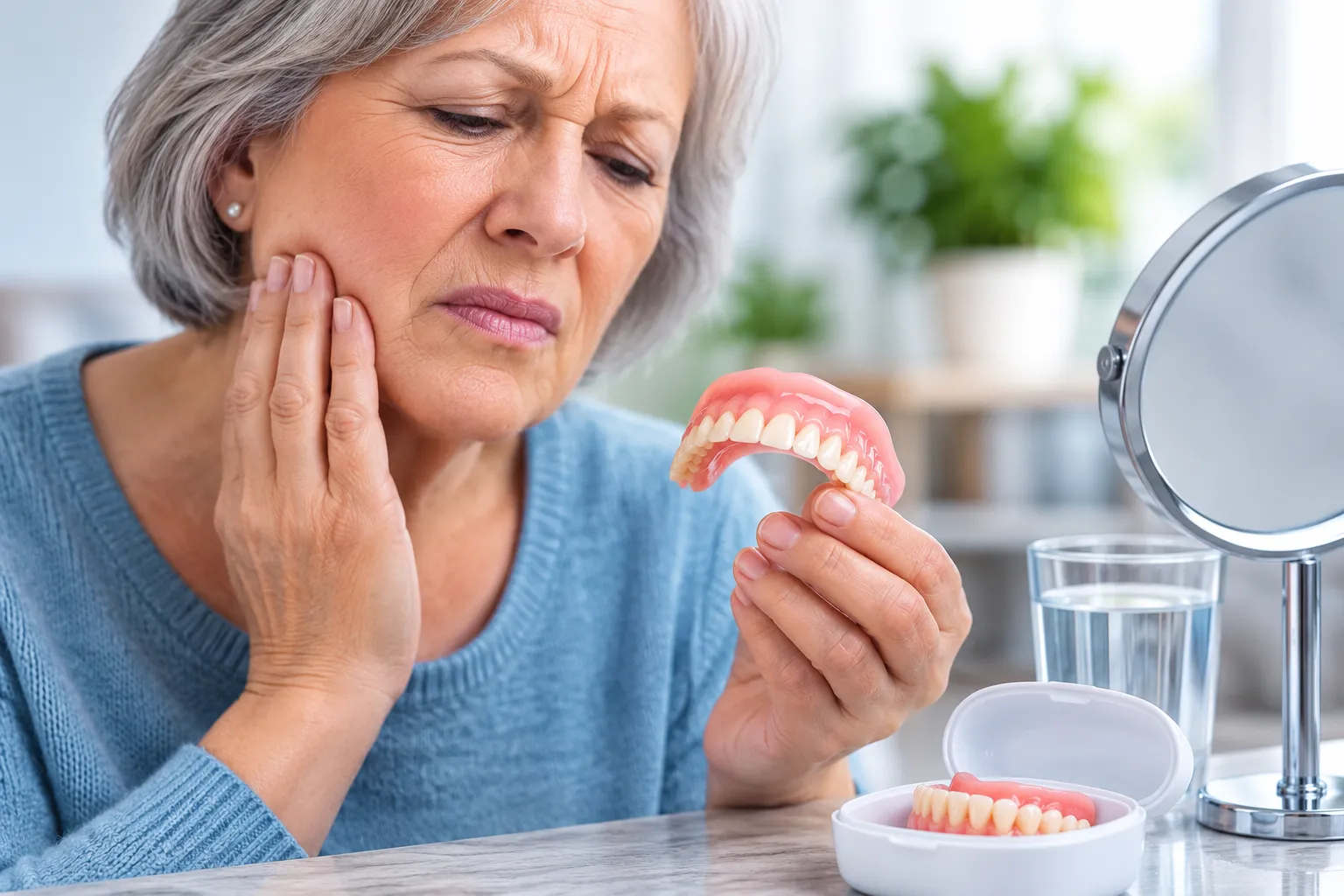
Have you ever put on your dentures in the morning only to find they suddenly feel uncomfortable? Perhaps eating has become painful, or you’re noticing tender patches that weren’t there before. If you’re dealing with denture sore spots, denture gum irritation, or dentures hurting gums, you’re far from alone. These are among the most common concerns for denture wearers, whether you’ve recently received a new set or have been wearing dentures for years.The good news is that sore spots are rarely something you have to live with. In many cases, a few simple changes, proper denture care, or a professional adjustment can restore comfort and prevent the problem from returning.
In this guide, you’ll learn:
- The most common causes of denture rubbing gums and why they occur.
- Practical tips for denture sore spots relief and keeping your gums healthy.
- Simple ways to prevent sore gums from new dentures and know when professional treatment is needed.
Let’s begin by understanding what’s happening inside your mouth.
Why Do Dentures Cause Sore Spots?
Dentures are designed to fit snugly over your gums, but your mouth is constantly changing. Your gums and jawbone naturally reshape over time, which means even well-made dentures can eventually become less comfortable.
When dentures apply too much pressure to one area or move while you’re chewing and talking, friction develops. Repeated rubbing can leave your gums red, swollen, or tender, and in some cases, small ulcers may form.
Common causes include:
- Newly fitted dentures that your mouth is adjusting to.
- Natural bone shrinkage after tooth loss.
- Loose or worn dentures.
- Food trapped beneath dentures.
- Dry mouth that increases friction.
- Poor denture hygiene leading to irritation.
Understanding the cause is the first step towards finding lasting relief.
Common Reasons for Denture Sore Spots
Every sore spot tells a story. Identifying the reason behind the discomfort helps you choose the right solution.
New Dentures
Just like breaking in a new pair of shoes, dentures often need a short adjustment period. Mild sore gums from new dentures are perfectly normal during the first few weeks. As your mouth adapts, your dentist may recommend one or two adjustment appointments to remove small pressure points and improve the fit.
Changes in Your Jawbone
Even if your dentures fitted perfectly a few years ago, your mouth may have changed. The jawbone naturally shrinks after teeth are lost, altering the shape of your gums. As a result, dentures may begin moving while eating or speaking, leading to denture rubbing gums and sore areas.
Worn Dentures
Dentures are durable, but they don’t last forever. Over time, everyday wear can change their shape or chewing surfaces. Small cracks or uneven edges may also create pressure on sensitive areas of your gums.
Poor Denture Hygiene
Dentures collect plaque, bacteria, and food particles just like natural teeth. Without proper cleaning, these deposits can irritate your gums and increase the risk of inflammation or infection.
Signs Your Dentures Need Attention
Many people believe discomfort is simply part of wearing dentures. In reality, persistent pain often signals that something needs attention.
Watch for these warning signs:
- Tender spots that last for several days or keep returning may indicate excessive pressure.
- If soft foods become painful to chew, your dentures may no longer be distributing pressure evenly.
- Dentures that slip, click, or rock are often a sign that they no longer fit correctly.
- Red patches, swollen areas, or recurring ulcers should never be ignored. These are clear signs that your gums are under too much stress.
Seeking professional advice early can prevent more serious problems later.
How to Relieve Denture Sore Spots
The aim is to reduce pressure on irritated areas while allowing your gums to heal naturally.
Here are some simple steps you can take to reduce discomfort.
Remove Dentures Overnight
Remove your dentures before bed every night unless your dentist advises otherwise. This gives your gums time to recover and improves blood flow to the tissues.
Use a Warm Salt Water Rinse
A warm salt water rinse is one of the easiest ways to support denture sore spots relief. It helps soothe irritated gums, keeps the area clean, and can reduce minor inflammation.
Eat Softer Foods
If chewing is uncomfortable, temporarily switch to foods that require less pressure, such as yoghurt, soups, mashed vegetables, scrambled eggs, and porridge. As your gums recover, you can slowly resume your regular eating habits.
Avoid DIY Denture Adjustments
It may seem tempting to file a rough edge at home, but even small changes can affect the fit. Always leave adjustments to your dental professional to avoid making the problem worse.
How to Prevent Denture Gum Irritation
A few simple habits can go a long way in keeping your dentures comfortable and your gums healthy. Prevention is always easier than treating painful irritation.
Here are some practical tips:
Clean your dentures daily
Brush them with a denture cleaner to remove plaque, bacteria, and food debris that can irritate your gums.
Remove dentures overnight
Giving your gums a chance to rest each night helps prevent inflammation and supports healthy oral tissues.
Visit your dentist regularly
Routine check-ups allow small fitting issues to be corrected before they become painful.
Replace worn dentures when needed
As your mouth changes over time, dentures may need relining or replacing to maintain a secure fit.
These habits can significantly reduce the risk of denture gum irritation and improve your overall comfort.
Can Denture Adhesive Help?
If your dentures move slightly while eating or speaking, using denture adhesive for sore gums may provide extra stability. By reducing movement, adhesive can minimise rubbing and improve comfort during the day.
However, adhesive should never be used to compensate for dentures that no longer fit properly. If discomfort continues despite using adhesive, it’s important to arrange a professional assessment. A simple adjustment is often a more effective long-term solution.
Conclusion
Experiencing denture sore spots can be frustrating, but they are usually a sign that your dentures or your mouth need a little attention. Whether the cause is denture rubbing gums, natural changes in your jaw, or sore gums from new dentures, taking action early can prevent more serious discomfort.
Don’t let sore spots or irritated gums affect your comfort or confidence. If you’re struggling with denture discomfort, taking action early can help prevent the problem from getting worse. First Care Global offers scientifically developed denture care solutions designed to improve comfort, reduce movement, and support a more secure fit for everyday wear. Explore our trusted denture care products today and take the next step towards lasting comfort and confidence.
Frequently Asked Questions (FAQs)
1. Why do my dentures hurt when I wear them?
Your dentures may hurt because they no longer fit correctly, create pressure points, or your mouth is still adjusting to them. If discomfort lasts more than a couple of weeks, a professional assessment is recommended.
- Using the right denture adjustment can often solve the problem.
- Persistent pain is not considered normal.
- Minor adjustments can greatly improve comfort.
2. What are the best home remedies for denture sores?
Several home remedies for denture sores can provide temporary comfort while your gums heal, but they won’t fix an ill-fitting denture.
Supporting gum healing includes:
- Rinsing with warm salt water.
- Eating soft foods until soreness improves.
- Removing dentures overnight.
3. What are the signs your dentures don’t fit properly?
Common signs your dentures don’t fit properly include slipping, clicking, sore spots, difficulty chewing, and recurring ulcers.
Maintaining a proper denture fit helps prevent these issues.
- Loose dentures often cause friction.
- Regular reviews help identify changes early.
4. Can denture adhesive prevent sore gums?
Denture adhesive can help improve stability and reduce movement, but it should never be considered a substitute for professional denture adjustments.
Good denture care also includes:
- Cleaning adhesive off daily.
- Following your dentist’s recommendations.
5. How long do sore gums from new dentures last?
Most cases of sore gums from new dentures improve within one to two weeks as your mouth adjusts.
Supporting new denture care involves:
- Wearing them as instructed.
- Attending follow-up adjustment appointments.
6. When should dentures be replaced?
Dentures should be replaced or relined if they become loose, worn, or uncomfortable.
Regular denture maintenance helps ensure they continue fitting properly.
- Changes in your jaw can affect the fit over time.
- Professional assessments help maintain long-term comfort.