
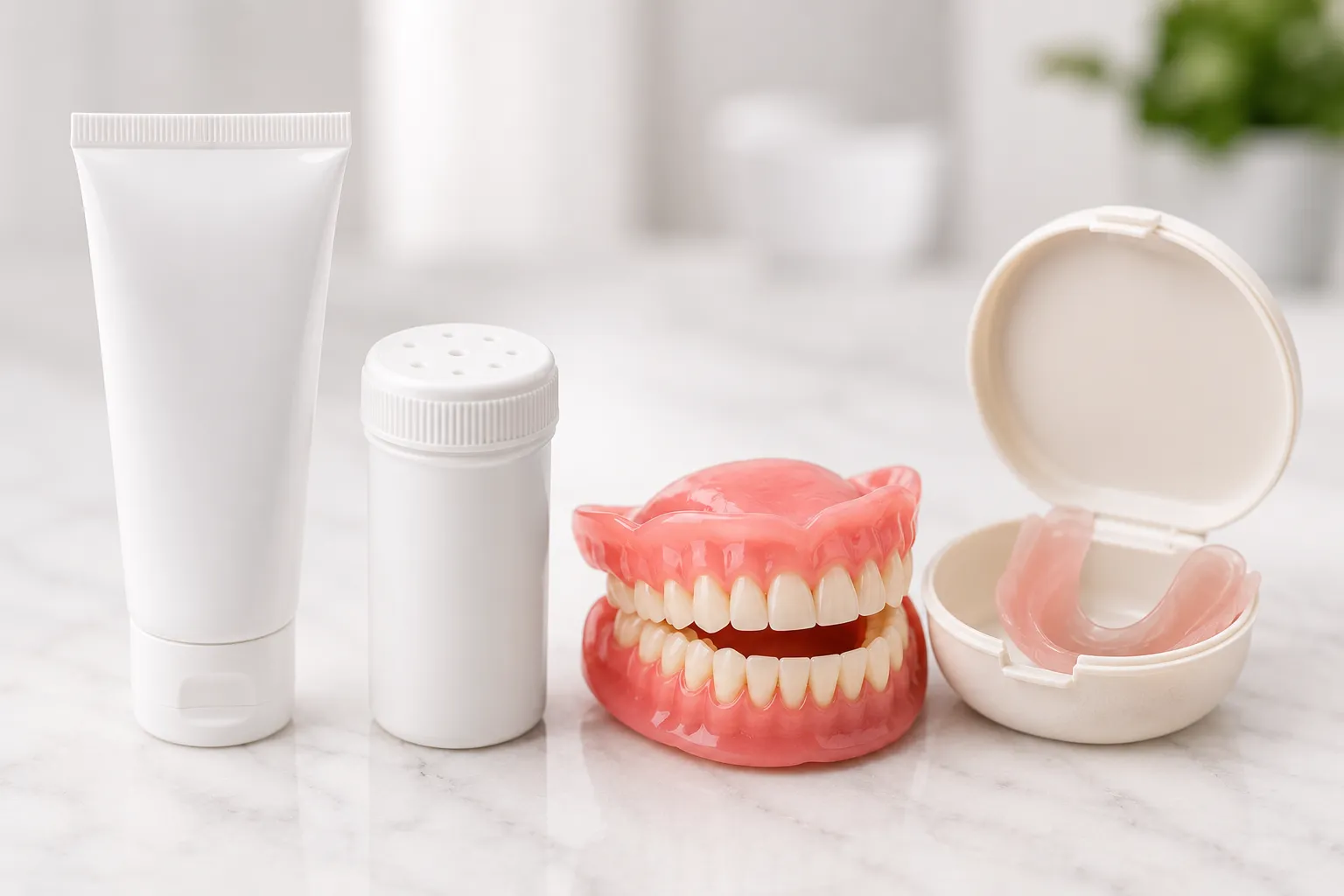
Have you ever sat down to enjoy a meal only to worry that your dentures might shift? Or perhaps you’ve skipped certain foods because your denture adhesive simply didn’t hold up throughout the day. If this sounds familiar, you’re not alone. Choosing the right denture adhesive can make the difference between constantly thinking about your dentures and forgetting you’re even wearing them.
The good news is that there isn’t just one solution. Whether you’re considering a traditional cream, a lightweight powder, or the increasingly popular thermoplastic denture adhesive, there’s an option designed to suit different lifestyles, comfort levels, and denture conditions.
In this guide, you’ll discover:
- The key differences between creams, powders, and thermoplastic adhesives.
- How to choose the best denture adhesive for your daily routine.
- Which adhesive works best for loose dentures, active lifestyles, and sensitive gums.
- Practical tips to help your dentures stay comfortable for longer.
Let’s explore which adhesive truly fits your lifestyle.
Why Denture Adhesives Matter More Than You Think
Many people assume denture adhesives are only needed when dentures become loose. In reality, even well-fitting dentures can benefit from the extra stability and comfort that adhesives provide.
A good adhesive can:
- Improve chewing confidence.
- Reduce food particles getting underneath dentures.
- Minimise gum irritation caused by movement.
- Help improve speech by reducing slipping.
Modern types of denture adhesive are designed for different needs, so choosing the right one is just as important as using one.
Understanding the Main Types of Denture Adhesive
Before deciding which option suits you, it’s worth understanding how each adhesive works.
| Adhesive Type | Best For | Main Benefits | Things to Consider |
|---|---|---|---|
| Cream | Everyday wear | Strong hold, easy to apply | Requires proper cleaning daily |
| Powder | Well-fitting dentures | Thin layer, less messy | May not provide maximum hold for loose dentures |
| Thermoplastic denture adhesive | Loose dentures, long-term comfort | Creates a soft cushion, reusable for days | Requires correct application process |
Each option has its strengths. Your lifestyle often determines which performs best.
Cream Adhesives
Cream adhesives remain the most commonly used option worldwide, and for good reason. They provide reliable retention throughout the day while creating a seal between the denture and gums.
Strong all-day hold
Cream adhesives work particularly well for people who eat a varied diet, including harder foods such as apples, chapatis, or meat.
Easy to find and use
Most users simply apply small strips before inserting their dentures.
Improved comfort
The cream creates a thin cushioning layer that helps reduce friction against the gums.
For someone wearing dentures every day with relatively stable gums, cream adhesives are often a dependable solution.
Powder Adhesives
If you dislike thicker products, powder adhesives may appeal to you. Instead of forming a paste, the powder activates when it comes into contact with saliva.
- Easy to apply with minimal mess.
- Leaves less residue during cleaning.
- Suitable for well-fitting dentures.
- Comfortable for users who prefer a thinner layer.
However, powders may not offer the same level of retention as creams, especially if dentures have become loose over time.
When comparing denture adhesive cream vs powder, powders generally work best when dentures already fit reasonably well.
Thermoplastic Denture Adhesive
One of the biggest developments in denture care is the rise of thermoplastic denture adhesive.
Unlike traditional adhesives that need daily application, thermoplastic products soften in warm water before being moulded directly onto the denture. Once cooled, they create a customised cushion that adapts to the shape of your gums.
This makes them especially attractive for people whose dentures no longer fit perfectly but who are not yet ready for replacement.
Custom cushioning
Instead of simply sticking dentures in place, they help improve the overall fit.
Longer-lasting support
Many thermoplastic products remain effective for several days before needing replacement.
Greater comfort
The cushioning effect helps reduce sore spots caused by loose dentures moving during eating or speaking.
This growing interest explains why many people now search specifically for thermoplastic denture adhesive rather than conventional products.
Choosing the Right Adhesive for Your Lifestyle
Everyone’s daily routine is different, which means the ideal adhesive varies from person to person.
If you’re frequently travelling, working long hours, or attending social events, cream adhesives usually offer reliable day-long security.
Powder adhesives provide enough grip while keeping the denture feeling light and natural.
Many people looking for the best denture adhesive for loose dentures are turning towards thermoplastic denture adhesive because of its cushioning effect and improved stability.
People with sensitive gums often appreciate adhesives that reduce movement rather than relying only on stickiness.
Choosing according to your lifestyle usually produces better results than choosing solely based on price.
Zinc-Free Denture Adhesives
You may have noticed more products advertising themselves as zinc free denture adhesive.
Why does this matter?
Although zinc has historically been included in some adhesives, many manufacturers now produce denture adhesive without zinc for people who prefer avoiding unnecessary ingredients during long-term use.
Benefits include:
- Peace of mind for regular users.
- Suitable for people following healthcare advice regarding zinc intake.
- Wide range of effective modern formulations now available.
Always follow the manufacturer’s instructions regardless of which product you choose.
Best Denture Adhesive in India
The Indian denture care market has expanded significantly over recent years. Consumers now have access to international brands alongside innovative solutions designed specifically for local needs.
When searching for the best denture adhesive in India, consider more than just marketing claims.
Look for products that offer:
- Comfortable wear throughout the day.
- Easy cleaning.
- Good customer reviews.
- Reliable retention.
- Suitable ingredients for your oral health needs.
Many online searches also include phrases such as denture glue India and denture fixative India, reflecting growing awareness that different products suit different situations rather than one universal solution.
If you’re exploring alternatives to traditional creams and powders, you’ve probably come across a Cushion Grip denture adhesive review. Unlike conventional adhesives, this thermoplastic denture adhesive creates a soft, flexible cushion that adapts to your gums, helping improve comfort while reducing denture movement.
It can be a suitable option for people whose dentures have become slightly loose but are still in good condition. However, the best results depend on how well your dentures fit and your overall oral health. If your dentures are causing ongoing discomfort or significant movement, it’s always advisable to consult your dentist, as an adjustment or replacement may be needed rather than relying on an adhesive alone.
Tips for Using Denture Adhesive
Even the best adhesive cannot perform properly if used incorrectly.
Using extra adhesive rarely improves retention. It often creates unnecessary mess and cleaning difficulties.
If dentures have become significantly loose, adhesives should not replace professional adjustment.
Removing old adhesive completely while cleaning, helps to maintain gum health and ensures better performance the next day.
Someone with well-fitting dentures may not benefit from the same adhesive as someone whose dentures have loosened over time.
Small adjustments in daily habits often improve comfort more than switching products repeatedly.
Conclusion
Choosing between cream, powder, and thermoplastic denture adhesive isn’t about finding one product that’s better than all others. It’s about finding the solution that works best for your lifestyle, eating habits, and denture fit.
Traditional creams continue to provide dependable daily hold. Powders offer simplicity and comfort for well-fitting dentures. Meanwhile, thermoplastic options are changing the way many people manage loose dentures by offering customised cushioning alongside improved stability.
Understanding your own needs is the first step towards making every meal, conversation, and smile feel natural again.
Don’t settle for slipping dentures or daily discomfort when the right solution could transform your confidence. If you’re unsure which adhesive is best for your dentures or you’re struggling with an uncomfortable fit, now is the perfect time to explore what works for you. At First Care Global, we offer a range of denture care solutions designed to help you achieve a secure, comfortable fit that lasts. Explore our range today and take the first step towards eating, speaking, and smiling with complete confidence.
Frequently Asked Questions
1. Which is the best denture adhesive for everyday use?
The ideal choice depends on your denture fit, eating habits, and comfort preferences rather than a single product for everyone. People with stable dentures often prefer creams, while those needing extra cushioning may explore newer options.
Using the right denture retention solution can improve your daily experience.
- Clean dentures thoroughly before each application.
- Follow the recommended quantity instead of applying extra.
- Replace worn dentures if adhesives no longer provide adequate support.
2. Is denture adhesive cream better than powder?
There isn’t a universal winner because both products serve different purposes. Creams generally provide stronger retention, while powders offer a lighter feel for well-fitting dentures.
Choosing the correct daily denture fixative depends on your individual needs.
- Creams usually work better during longer days.
- Powders leave less residue during cleaning.
- Ask your dental professional if you’re unsure which suits your dentures.
3. Is thermoplastic denture adhesive suitable for loose dentures?
Yes. Many people with loose dentures choose thermoplastic products because they create a customised cushion that helps improve stability and comfort between dental visits.
A properly fitted denture cushioning system may help reduce movement.
- Follow application instructions carefully.
- Replace the material as recommended.
- Seek professional advice if dentures continue to feel unstable.
4. Are zinc-free denture adhesives safe?
Many users choose zinc-free products simply because they prefer formulations without added zinc for long-term daily use.
Modern oral care adhesive products are available in a wide range of formulations.
- Always read ingredient labels carefully.
- Use only the recommended amount.
- Speak with your dentist if you have ingredient-related concerns.
5. How long should denture adhesive last?
Most traditional adhesives are designed to provide support throughout the day, although performance depends on eating habits, saliva levels, and denture fit.
Proper denture maintenance also plays an important role.
- Clean dentures every evening.
- Remove all leftover adhesive before reapplying.
- Store dentures correctly overnight if advised.
6. Can I use denture adhesive every day?
Yes. Daily use is common, provided the adhesive is used correctly and your dentures fit properly.
Maintaining good oral hygiene for denture wearers helps protect your gums while improving adhesive performance.
- Visit your dentist regularly for fit assessments.
- Watch for persistent sore spots or irritation.
- Replace dentures when they become excessively worn.